
Overseas-Korean Special Admission: Documents Trip Applicants Up Before Eligibility Does — Getting the Registration Certificate and Entry/Exit Proof
The two documents overseas-Korean special admission applicants most often miss -- the Overseas Korean Registration Certificate and the Certificate of Entry and Exit Facts -- and where each one actually comes from.
Applicants to Korea's special admission track for overseas Koreans often nail down the residency-requirement math only to run out of time on the paperwork stage. The eligibility itself can be calculated in advance using a standard like 1,095 overlapping days of work, enrollment, and residence, but the documents that actually prove that period aren't always issued domestically — some come only from an overseas mission, and passport type can add an extra document — so finding this out late means scrambling right before the application deadline. It's worth mapping out ahead of time where and how to get the two most commonly required documents: the Overseas Korean Registration Certificate and the Certificate of Entry and Exit Facts.
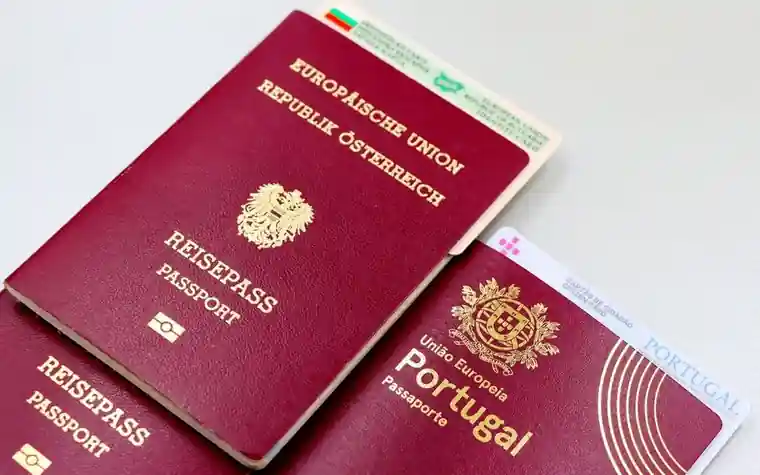
Overseas Korean Registration Certificate — an overseas mission if you're abroad, the consular service division if you're in Korea
The Overseas Korean Registration Certificate proves information registered with an overseas Korean mission, and it's used broadly — for a child's transfer into a Korean school, as a submission document for special admission, or to prove overseas residence to a domestic public agency. You can apply for it at the Korean embassy or consulate-general (overseas mission) where you're registered, if you're abroad, or at the Ministry of Foreign Affairs' consular service division, if you're in Korea. Online, it can be issued through the Overseas Koreans civil affairs portal, and Government24 also has a process for requesting the certificate from the head of the Overseas Koreans Agency or the registering mission. If you were never registered with an overseas mission in the first place, the certificate simply won't be issued, so the first step before gathering documents is confirming that you're actually registered as an overseas Korean.
Certificate of Entry and Exit Facts — when Government24 works, and when it doesn't
The Certificate of Entry and Exit Facts is a document showing your entry and exit history on a Korean passport, date by date, and it's the core evidence backing the residency requirement for special admission. Online issuance through Government24, available 24 hours a day, is possible, but you need your own joint certificate or Digital One-Pass and a printer to output it. If those conditions aren't met, you'll need to apply in person at an overseas mission, a domestic immigration office (or its branch), or a city/county/district or town/township/neighborhood community center. Online issuance actually failing — for example, when a certificate has lapsed while you're staying abroad and can't be renewed — happens often enough in practice that it's safer to try issuing it once with time to spare, rather than for the first time right before the deadline, and switch to the in-person route if there's a problem.

Your passport type adds one more document
If you're applying for the certificate of entry and exit facts yourself while abroad, you basically need your valid Korean passport original plus one copy. The point people often miss here is that if you hold a passport issued after December 20, 2020, in the format with the resident registration number removed, you must also submit a "passport information certificate." The more recently your passport was reissued, the more likely it is to be this format, and if you don't check your passport's format in advance, you can end up thinking you have every document ready — only to have to go back for one more at the counter.
Eligibility calculation and document proof look at the same period differently
The three-year overseas-Korean exception requirement is calculated using 1,095 overlapping days of work, enrollment, and residence, but the documents that actually prove the period used in that calculation are requested separately — a certificate of employment, a certificate of enrollment, and the certificate of entry and exit facts. In other words, the "three years" in the eligibility calculation and the unbroken residence history on paper come from different documents, so you can't settle both with a single piece of paper. Since the combination of documents each university requires varies slightly, you need to check the exact submission list separately in the admissions guidelines of the university you're applying to.
Sort documents that need translation and notarization from those that don't
The Overseas Korean Registration Certificate and the Certificate of Entry and Exit Facts are both issued in Korean by domestic institutions, so they don't separately require translation or notarization. By contrast, documents issued by a foreign institution, like a certificate of enrollment or transcript from an overseas local school, sometimes require certified translation depending on the university, so you shouldn't prepare domestically issued and overseas-issued documents by the same standard. This distinction matters especially if you're also preparing the path from graduating an international school into a Korean university, because the document standards required for academic-credential recognition and for the overseas-Korean special admission track can end up being different again.

If Jeju international school enrollment is mixed into your history
There are also cases where a child was enrolled at a Jeju international school for a stretch in the middle of a parent's overseas assignment. Here, universities can interpret differently whether that period counts as overseas residence for the overseas-Korean exception calculation, or whether it counts as domestic enrollment and breaks the period. The fact that Jeju international schools are accredited on different legal grounds than general foreign schools is often a point of contention not just for the tax credit but for this kind of enrollment-history determination too, so it's better to check directly with the admissions office of the university you're applying to about how they'll treat that period.
Document prep order
- First confirm whether you're registered as an overseas Korean with an overseas mission.
- Get the Overseas Korean Registration Certificate issued through your overseas mission, or the consular service division / Overseas Koreans civil affairs portal.
- Try the Certificate of Entry and Exit Facts through Government24 online first, and switch to visiting an overseas mission or immigration office if you hit a certificate problem.
- Check whether your passport is the resident-registration-number-removed format issued after December 20, 2020, and if so, prepare the passport information certificate as well.
- Cross-check the list of additional documents, such as employment and enrollment certificates, in your target university's admissions guidelines.
This is an English translation of an article originally written in Korean. 한국어 원문 보기 ›