
On Exam Day, Government Offices and Companies Are Asked to Start Work After 10 a.m.: Vehicles Are Blocked From 200 m Before the Test Site, and Flights Are Adjusted for the 25-Minute English Listening Test
A press-based summary of the support plan for the 2027 CSAT on 19 November: start times moved to 10 a.m. or later, more capital-area subway trains from 6:00 to 8:10, vehicle control from 200 m before the site, flights and drills adjusted from 1:10 to 1:35 p.m., and when to check the weather.
On the morning of the exam, what worries families most is often not the questions but the trip to the test site. This year the government announced its exam-day support plan well ahead of time. On 20 October 2026 the Ministry of Education reported "Support Measures for the Stable Administration of the 2027 CSAT on Exam Day" to the Cabinet meeting. This article checks that report against news coverage and sets out what work start times, transport, listening-test noise, weather and safety mean for candidates and parents. Transport details vary by region, so your city or provincial office of education has the final say.

On Thursday 19 November, 551,864 candidates head to 1,312 test sites
The 2027 CSAT takes place on Thursday 19 November 2026 at 1,312 test sites across 85 test districts.
The expected number of candidates is 551,864, which is 2,310 fewer than last year.
For regular candidates the exam runs from 8:40 a.m. to 5:45 p.m.
So many people move at the same hours that the plan centres on spreading out traffic.
Government offices and companies are asked to start work after 10 a.m.
On exam day the government asks public offices and companies to move their start time to 10 a.m. or later.
The aim is to cut commuter cars and subway passengers during the hours when candidates travel to school.
It is a request for cooperation, however, so not every workplace will follow it.
If a parent plans to drive a candidate, or must be at work at the usual time, it is safer to check with the employer in advance.
Between 6:00 and 8:10 a.m. the capital-area subway runs more trains
The candidates' travel window is set at 6:00 to 8:10 a.m., and during it the capital-area subway increases the number of trains in service.
Emergency transport vehicles of administrative agencies, such as those run by police stations, are also placed along candidates' routes.
8:10 is the same time as the deadline for being seated, so arriving right at that moment is too late. The entry rules are in our article on the CSAT ID and the 8:10 check-in.
This coverage did not say how to request an emergency vehicle individually, so follow your office of education and the police.
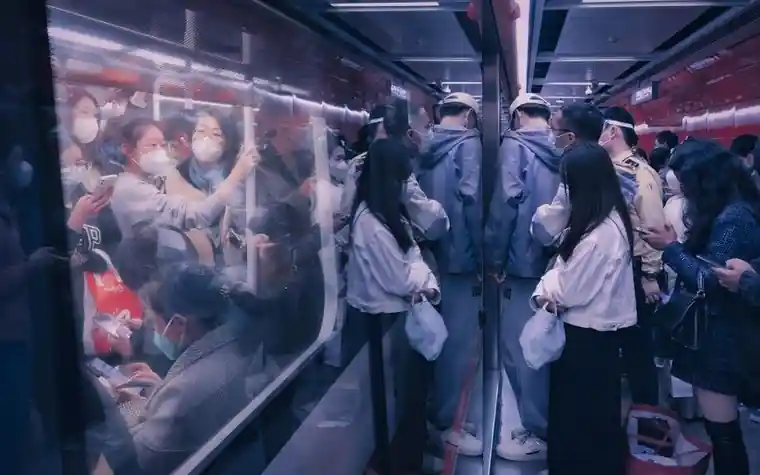
From 200 m before the test site, vehicles are blocked and candidates walk in
On exam day vehicle entry is controlled from 200 m before the test site.
Even if you go by car, that means getting out at that point and walking.
200 m takes about three minutes at an easy pace, but with bags and nerves it can take longer, and there may be a queue at the gate.
Leave enough time between getting out of the car and passing through the entrance when you set your departure time.
That is my own judgement based on the reported control distance, and the control point can differ slightly by site.
For the 25-minute English listening test, even flights and military drills are paused
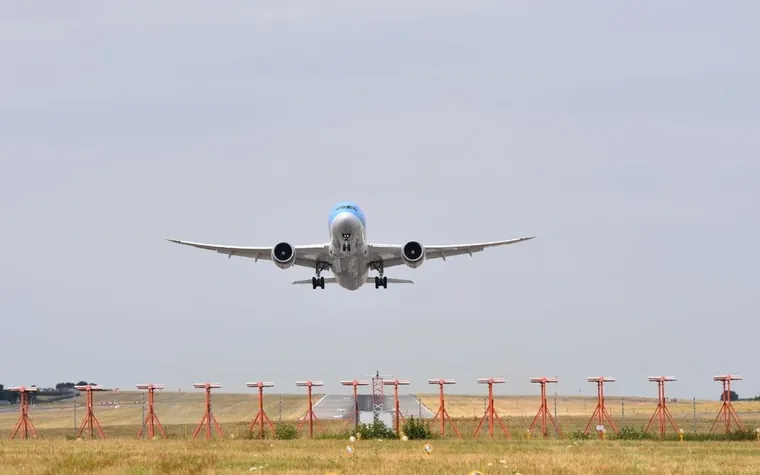
During the third-period English listening test, from 1:10 p.m. to 1:35 p.m., take-off and landing times for aircraft and helicopters are adjusted.
Military training such as artillery fire and tank movement is also paused briefly.
Buses and trains slow down and avoid horns, and nearby event venues and construction sites are asked to keep everyday noise down.
For candidates, it is enough to know that outside noise is kept to a minimum for these 25 minutes.
Check the weather on the Korea Meteorological Administration website from 13 November
From 13 November, a week before the exam, weather information for the test sites is available on the Korea Meteorological Administration website.
Transport plans for island and remote-area candidates and snow-clearing plans are also prepared.
Bad weather lengthens the trip, so after the 13th look at the forecast once more and re-check how you will travel and when you will leave.
An information network for disasters such as earthquakes is also set up, and the 16 provincial offices of education inspect every test site.
The ministry handles question-paper security and on-site support in each district
The Ministry of Education runs question-paper and answer-sheet security together with the National Police Agency and the provincial offices of education, and sends central liaison officers to every test district.
This is not something candidates do themselves, but following the proctor's instructions at the site is the safest way to stay within that system.
For items you may bring and the watch rules, see our article on CSAT watches and prohibited items. For the fee refund if you cannot sit the exam on the day, see our article on the application fee refund.
What the family should check the day before
1) Decide how you will reach the test site and where vehicles are stopped. 2) Work backwards from the 8:10 check-in deadline to set the departure time. 3) After the 13th, check the forecast and decide on clothing and transport. 4) Find out whether a parent's workplace is moving its start time.
Dates for score reports and applications after the exam are lined up in one row in our post-CSAT calendar.
This article confirms a government announcement through press reports, so check the latest notices on the Ministry of Education and Korea Institute for Curriculum and Evaluation websites and from your provincial office of education.
This is an English translation of an article originally written in Korean. 한국어 원문 보기 ›