
Using a Phone in Class Became Unlawful in March 2026 — The Three Exceptions and What School Rules Decide
Article 20-5 of the Elementary and Secondary Education Act took effect on 1 March 2026. Three exceptions exist and each still needs permission. Restricting possession on the premises is the school’s choice, and storage and liability are set by school regulations.
"Isn't collecting phones during class a violation of rights?" was, for years, a question every school answered differently. National Human Rights Commission decisions collided with school rules, and it was handled at a homeroom teacher's discretion. Then an amendment to the Elementary and Secondary Education Act (Act No. 21049), promulgated on 16 September 2025, took effect on 1 March 2026 and moved the question into statute. The new provision is Article 20-5 (Restrictions on the Use of Smart Devices on School Premises). For a household with a middle school student, it is worth separating what the law now settles from what still varies by school.
What the law prohibits is use during class
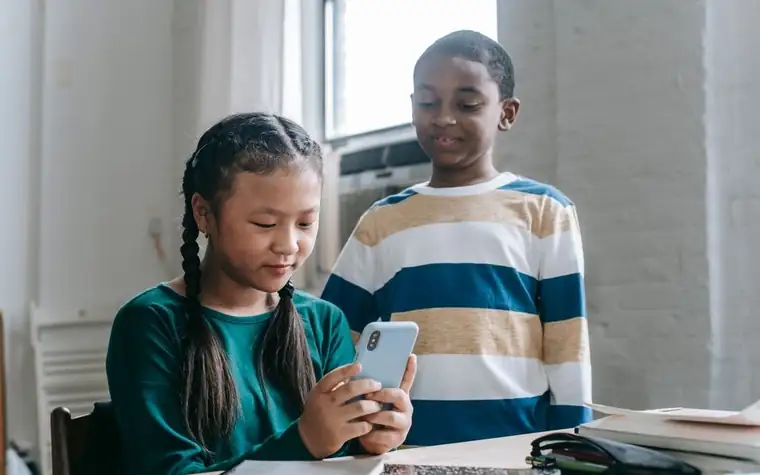
Paragraph 1 opens like this: "A student shall not use a mobile phone or other smart device during class." The subject is the student, and the scope is class time. The law does not itself prohibit use during breaks or lunch, and it does not bar bringing a device to school.
What changed is the character of the authority. Until now "no use during class" was a rule the school set, and the legitimacy of that rule was contested case by case. It is now a duty imposed directly by statute, so the burden on schools to justify it separately has eased.
Three exceptions, with one further condition
The proviso to paragraph 1 defines three exceptions.
- Use as an assistive device by a student with a disability or requiring special education
- Use for educational purposes
- Use to respond to an urgent situation
The important part is that falling into one of the three is not by itself enough. The text reads "in any of the following cases where the head of the school and the teacher permit it." In other words, the ground has to apply and permission has to be given. For a lesson built around searching or photographing, that means the teacher of that lesson permits it; for a student who needs a device on health grounds, arranging it with the school in advance is the reliable route.
"Use restriction" and "possession restriction" are different provisions
Paragraph 2 grants a separate power: "The head of the school and teachers may restrict the use and possession of smart devices on school premises where necessary to protect students' right to learn and teachers' educational activities." This is where possession first appears.
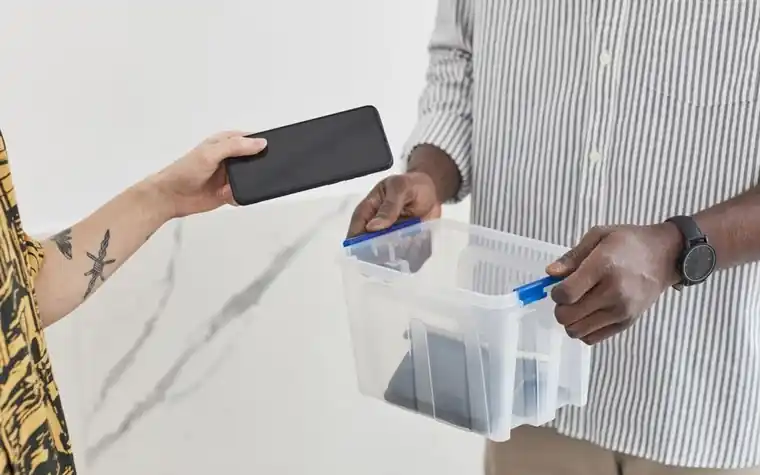
So: the ban on use during class is nationwide, while restricting possession on the premises is the school's choice. A school that collects devices in the morning and returns them at dismissal, and a school that allows possession but blocks use in class, are both inside the law. A neighbouring school doing it differently does not mean either of them is in breach.
The specifics are set by school regulations
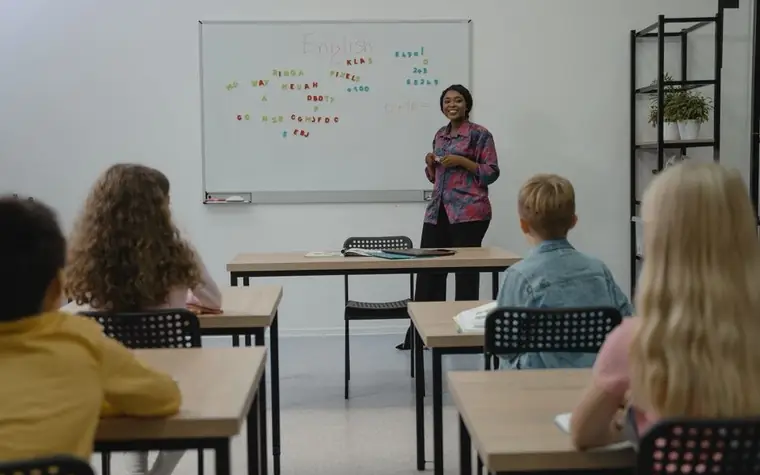
Paragraph 3 hands that part to the school: "Where the use and possession of smart devices on school premises are restricted under paragraph 2, the standards and methods of restriction, the types of smart devices and other necessary matters may be prescribed by school regulations." What parents actually need to read is not the statute but those regulations.
Four items are generally worth checking: which hours are restricted, where and how devices are stored if collected, how responsibility for loss or damage is allocated, and what measures follow a breach. Storage method and liability for loss vary most between schools, so they are worth reading in advance. Note that the appeal route for disputes over school measures is a different animal from the one described in the 90-day window for appealing a school violence decision, and the two should not be conflated.
A companion provision — exclusion from the Child Welfare Act
One easily missed but practically significant provision came with the same amendment. The former Article 20-5 moved to Article 20-6, and a new subparagraph 4 was added to it: "restriction on the use and possession of smart devices on school premises under Article 20-5(2)."
Article 20-6 provides that legitimate acts by the head of a school and teachers are not to be regarded as prohibited acts under Article 17(3), (5) and (6) of the Child Welfare Act. Adding device restriction to that list means the law has settled that a collection or storage carried out according to procedure is not a target for a child abuse report. Read it as tidying up a situation in which teachers who followed the rules were still being reported. The premise is "legitimate acts," however, so handling that departs from what the school regulations set out is not protected.
Digital literacy education became a duty too
The same amendment created Article 20-7. The head of a school must endeavour to ensure that literacy education on the proper use of smart devices, under Article 22-5 of the Framework Act on Education, takes place within the school curriculum. The structure pairs the prohibition with teaching rather than leaving the prohibition alone.
In middle schools this is often placed in creative experiential activities or in the information subject, and it can be found in the curriculum guidance issued at the start of term. How middle school grades and assessment are actually determined is set out separately in middle school grades are not decided in exam week alone — checking the weighting of performance assessment.
Where to read the regulations, and how to comment
School regulations are published on the school website under information disclosure or the school rules board. If they are hard to find, searching the school on the School Info portal will show them as a disclosure item. The school steering committee is involved in amending them, so if you judge the storage arrangements or the liability clause to be a problem, raising it through a parent member of the steering committee is the formal route.
Other things that actually changed in classrooms from March 2026 are collected in what actually changed in classrooms in March 2026.
What parents should check, in order
- Check the school regulations for whether your school restricts possession as well, or only use during class.
- If devices are collected, read the storage location and the loss and damage liability clause.
- If your child has health or safety grounds, arrange the exception with the school at the start of term and get it in writing.
- Check what stages of measures follow a breach and talk it through with your child in advance.
- If you need to reach each other around travel to and from school, plan around whether use outside class hours is permitted.
- If the rule itself looks wrong, submit comments through the school steering committee. For how middle schools are assigned in the first place, see how middle schools are assigned.
This article was compiled in August 2026 from the amendment to the Elementary and Secondary Education Act (Act No. 21049, promulgated 16 September 2025, in force 1 March 2026) — Article 20-5 (Restrictions on the Use of Smart Devices on School Premises), the new subparagraph 4 of Article 20-6, and Article 20-7 (Education on the Use of Smart Devices) — together with the Ministry of Education guidance published on Korea's policy briefing service. Whether possession on the premises is restricted, how devices are collected and stored, and what measures follow a breach are all left to school regulations and therefore differ by school, so confirm the actual application against your own school's regulations and its start-of-year guidance. This is an outline of the legislation and does not substitute for legal advice on an individual case.
This is an English translation of an article originally written in Korean. 한국어 원문 보기 ›