
National Flu Vaccination Opens September 21 — Free Coverage Now Extends to Age 14
Korea's 2026-2027 national influenza vaccination program starts in late September. Free coverage for children now extends through age 14, and dose count depends on prior vaccination history.
The 2026-2027 season national influenza vaccination support program begins in late September. This year the free-vaccination age for children expanded from under 13 to under 14 -- so if your child is a middle schooler and you'd assumed they no longer qualified under the old cutoff, it's worth checking again.
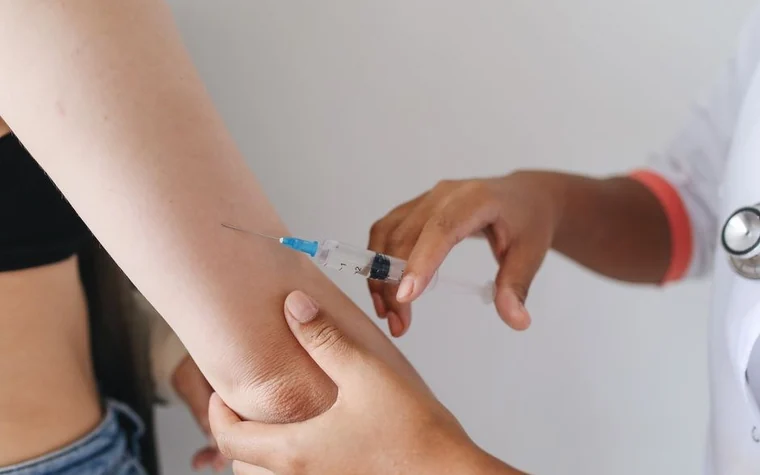
Expanded to "under 14" this year
The Korea Disease Control and Prevention Agency (KDCA) announces new eligibility and dates for its national vaccination support program every season (September through the following April). Starting with the 2026-2027 season, the free-vaccination age range for children grew by one year, from 6 months through age 13 to 6 months through age 14. For parents who assumed the program stopped at upper elementary grades, this means middle-school first- and second-graders are newly included this year. Beyond children, the program also covers pregnant women and adults 65 and older.
The start date depends on your child's dosing history
Within the same season, the vaccination start date can differ by a day or two depending on how many doses a child needs. Children under 9 who are getting a flu shot for the first time, or who received only one dose last season, need two doses and start earlier; everyone else needs just one dose and starts a few days later. Pregnant women start on the same date as the one-dose group. Because the exact start date is announced separately each season, checking that season's notice on the vaccination assistant site (nip.kdca.go.kr) is the most reliable way to confirm it.
Why the one-dose-vs-two-dose question gets confusing
A child receiving a flu vaccine for the first time between 6 months and age 8 needs two doses spaced four weeks apart to build immunity. But if that child already received two or more flu doses in a past season, only one dose is needed from this season on. In other words, the number of required doses isn't determined by age alone -- prior vaccination history matters just as much. Checking your child's recorded history on the vaccination assistant site beforehand cuts down on confusion about dose count at the clinic.

Free doses are only available at designated clinics
The national program isn't free at just any clinic -- it's free (no out-of-pocket cost) only at clinics and hospitals registered as designated providers. You can search for a nearby designated provider through the "Find a Designated Clinic" menu on the vaccination assistant site, and public health centers also offer the vaccine. If your regular pediatric clinic isn't a designated provider, you may still be charged a fee even though your child is otherwise eligible for free vaccination, so it's safer to confirm before the visit.
School group vaccination vs. an individual clinic visit -- which is better?
Some elementary and middle schools partner with public health centers or local providers to run on-campus group vaccination. Group sessions save time, but the individual health screening beforehand tends to be brief. A child with an underlying condition or a history of a reaction to a past vaccine is safer going to their regular pediatrician for an individual dose with a fuller screening. If a group-vaccination notice comes home from school, whether to opt in should be decided based on your child's health history.
If your child is outside the eligible age -- what a paid dose costs
Students 15 and older, and healthy adults generally, aren't covered by the national support program and need a paid dose. Prices vary by clinic and shift year to year with vaccine supply, so the only reliable way to get an exact figure is to call the clinic you plan to visit. If siblings split across the free and paid categories by age, it's worth deciding in advance whether to time their vaccinations together anyway.

How a school absence after vaccination is handled
If a child runs a mild fever or feels unwell the day of vaccination and can't attend school, most schools treat it as an excused (illness) absence under their own notice and academic policies. This can vary by school's academic management guidelines, though, so if the vaccination date lands near a test or an important school event, it's safer to let the homeroom teacher know in advance. Unlike infant health check-ups, where missing the fixed window can mean losing that check-up entirely, flu vaccination timing can be adjusted somewhat within the season without much downside.
In order
1) Check your child's vaccination history on the vaccination assistant site (nip.kdca.go.kr) to work out whether they need one dose or two. 2) Look up a designated provider near you ahead of time. 3) If a school group-vaccination notice arrives, decide between group and individual vaccination based on your child's health history. 4) If the vaccination date overlaps a school schedule, let the homeroom teacher know in advance. 5) If your child is 15 or older, they aren't covered by the program, so confirm the paid-dose price with the clinic separately. As with the standard approach to catching up on a missed vaccination, the season's exact schedule is always worth reconfirming through the KDCA's official notice. It's also easy to confuse this with the student health screening schedule, so it helps to log each program's timing separately rather than mixing them up.
This is an English translation of an article originally written in Korean. 한국어 원문 보기 ›