South Korea's Single-Parent Family Education Allowance Is a Separate Program From the Education Benefit -- $77 a Year in School-Supply Money, and a 65% Income Cutoff
Under the Single-Parent Family Support Act, the child education allowance (school-supply subsidy) cannot be paid on top of the Education Benefit -- who qualifies, the income line, and how to apply
Most single parents in Korea already know about the monthly child-rearing allowance. What gets missed is a separate line item inside the same Single-Parent Family Support Act: a subsidy for school supplies, called the child education allowance. Because the amount is small, many people skip applying even after hearing about it -- or assume they already get it because they receive the school-level Education Benefit. The two programs run on different legal grounds, and you cannot collect both. Here is the order to check them in.

Single-parent family benefits come in several separate items
Article 12 of the Single-Parent Family Support Act requires payment of a living allowance, a child-rearing allowance, an additional child-rearing allowance, and a child education allowance (school-supply subsidy) to low-income single-parent and grandparent-headed households. The child-rearing allowance lands in the bank account every month, so people notice it. The education allowance is easy to miss entirely if no one specifically tells you about it. Both come from the same law, the same article -- they are simply separate benefits.
It's for children in elementary, middle, or high school
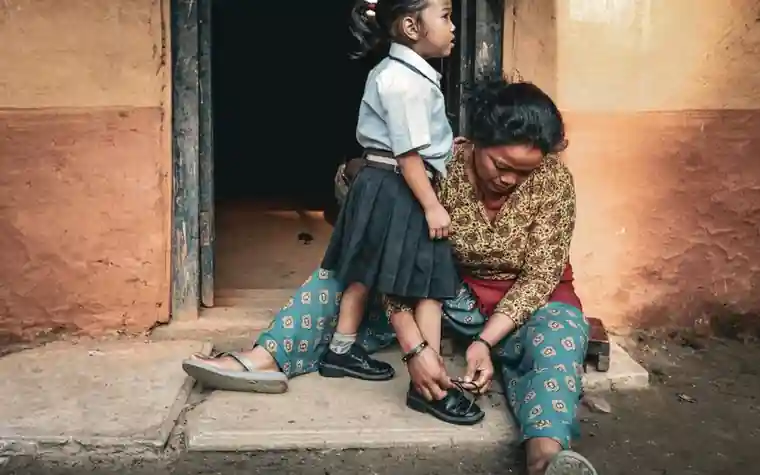
The child education allowance goes to single-parent and grandparent-headed households with elementary, middle, or high school children. Preschoolers and college students don't qualify. The Ministry of Gender Equality and Family's public guidance on child-rearing support specifically names these three school levels, and if a household has more than one child, each is counted separately regardless of school level.
The payment is $77 a year per child
The amount is 100,000 won (about $77) per child, per year. Next to the monthly child-rearing allowance, it looks small enough that some families never bother applying -- but there's no reason to leave money on the table for the cost of one application form. Two children means 200,000 won; three children means 300,000 won, scaling with the number of kids. For households where school-supply costs all hit at once at the start of the term, it's not a large sum, but it takes some of the edge off that particular week.
The income line is 65% of median income -- by household size
Eligibility requires assessed income at or below 65% of the standard median income. Assessed income isn't just wages -- it also adds in an income-converted value of assets, so it's not a simple salary comparison. Converting South Korea's 2026 standard median income by household size gives the following.
| Household size | 2026 standard median income (monthly) | 65% cutoff (monthly, approx.) |
|---|---|---|
| 2 people | 4,199,292 won | 2,729,540 won |
| 3 people | 5,359,036 won | 3,483,373 won |
| 4 people | 6,494,738 won | 4,221,580 won |
This table is a simple income-only conversion for reference. Your exact assessed income, which also factors in asset conversion, is more reliably checked through the Bokjiro simulation calculator or by asking your local community service center.
If you're already receiving the Education Benefit, you can't stack this on top
Here's where it splits. A household already receiving the Education Benefit under the National Basic Living Security Act or education support under the Emergency Welfare Support Act cannot also receive Single-Parent Family Support Act benefits covering the same ground. In other words, households drawing the Education Benefit can apply for the child education allowance, but it won't be paid on top. One exception to keep straight: the child-rearing allowance can still be paid alongside it. What the Education Benefit itself covers, and whether unused amounts carry over, is covered separately in Education Benefit Voucher Usage Deadline.
Apply through Bokjiro or your local community center, any time of year
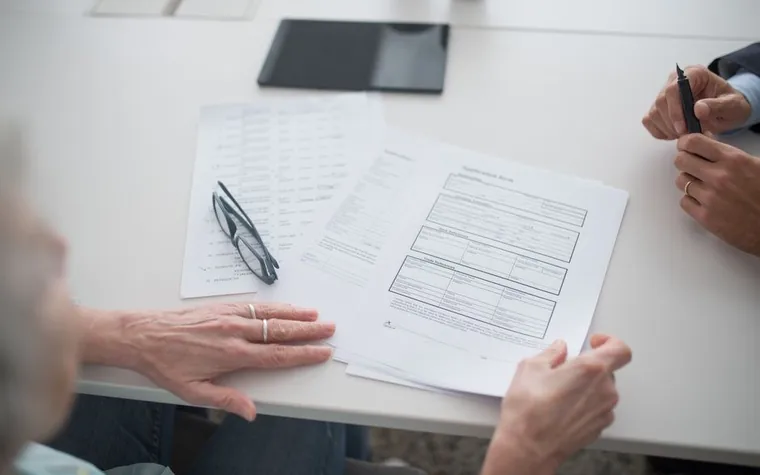
You can apply online through Bokjiro (bokjiro.go.kr) or in person at the community service center covering your registered address. This isn't a program with a fixed application window -- applications are accepted year-round. Once you submit, your city, county, or district office reviews income and assets before deciding whether you qualify. Even if you've already been issued a single-parent family certificate, the child education allowance is a separate application every time -- it isn't a benefit that continues automatically. Miss that distinction and you can simply let the annual application window pass unnoticed.
Other low-income family programs worth checking at the same time
If you're a single parent, there are a few other programs beyond the child education allowance that are easy to overlook. Households in a crisis situation may be able to separately draw living-cost support through the Crisis Youth Special Support Program, and children under state protection can also look into the Didim Seed Savings Account for building a lump sum at maturity. Each program has its own application channel and income cutoff, so it's worth checking them one at a time.
In summary
Here is the order to check things in. ① Is your child currently enrolled in elementary, middle, or high school? ② Is your household's assessed income at or below 65% of median income (check via the Bokjiro simulator)? ③ Are you currently receiving the Education Benefit or Emergency Welfare education support -- if so, you don't qualify for the separate allowance. ④ If not, apply for the child education allowance through Bokjiro or your community service center. ⑤ Other welfare benefits such as the child-rearing allowance can still be received separately. Don't skip this because the amount looks small -- if you have more than one child, it's worth the paperwork. This article summarizes publicly available Ministry of Gender Equality and Family and Bokjiro materials as of August 2026. For your household's exact assessed income and eligibility, check with the community service center covering your registered address.
This is an English translation of an article originally written in Korean. 한국어 원문 보기 ›