
Grades 1-2 School Violence Now Starts With a Relationship Recovery Program Before Review -- What Parents Should Know About the Cooling-Off Period
Since March 2026, minor school violence cases in elementary grades 1-2 go through a relationship recovery program before review. Who is covered, the steps, consent, and a parent's action order.
When a quarrel between first- or second-graders was reported as school violence, the case could once move straight into formal review. Since March 2026 the order has changed. Under the Ministry of Education's 2026 school violence implementation plan, minor incidents involving grades 1-2 of elementary school now go through a relationship recovery program before any committee review, a system called the "relationship recovery cooling-off period." This guide explains what happens after a report and what parents should know.
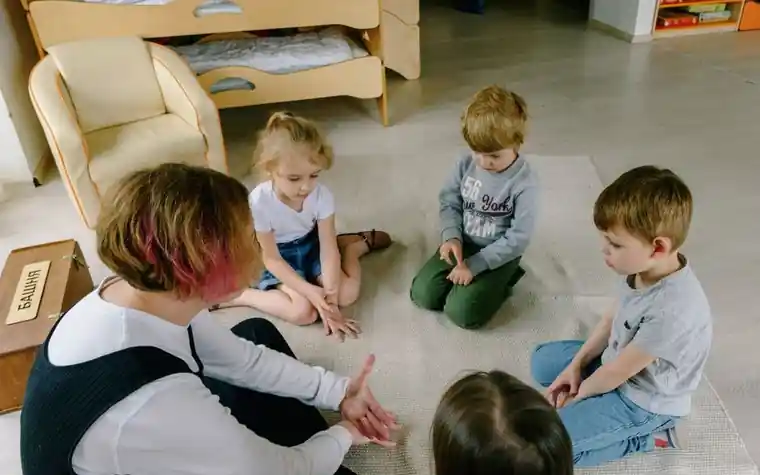
What the cooling-off period is -- a chance to reconcile before review
The point of the system is the order of steps. When a minor incident is filed, the school does not immediately ask the School Violence Countermeasure Committee to review it. Instead, a relationship recovery program is run first to work through the conflict between the two children in an educational way. According to news reports, in the education offices piloting the system, the request for review by the school's dedicated school violence unit is held back until the program ends. It is not a way to avoid consequences. It is a procedure that tries recovery before punishment for conflicts among very young children.
Why only grades 1-2 -- a quarter of cases were found not to be school violence
The Ministry of Education's reasoning in the Fifth Basic Plan for School Violence Prevention and Countermeasures (2025-2029) rests on statistics. Of the 1,174 first- and second-grade cases the committees handled in the 2023 school year, 293 (about 25%) were concluded not to be school violence. That suggests quarrels that began as play or misunderstanding often ended up in a heavy process. Under the ministry's standard the cooling-off period applies to grades 1-2, and grade 3 and above follow the existing procedure. Some provincial offices widen the scope on their own, though. The North Chungcheong Office of Education said it would apply the approach to minor cases in all elementary grades from 2026. Check with your local education support office for how it runs where you live.
Who runs it -- the relationship improvement support team
A homeroom teacher does not handle this alone. Each education support office sets up a relationship improvement support team staffed by teachers with experience in school violence cases or counseling specialists. The ministry announced a plan to raise relationship improvement staff at the School Violence Zero Centers from 2,793 in 2025 to about 2,900 in 2026.
How the program runs -- the Seoul Eastern Education Office example
The details differ by region. The pilot in the Seoul Eastern Education Office has been described in four stages: advance briefing, individual interviews, the joint conversation, and closing with follow-up. A mediator meets the children separately, then arranges a conversation with both, and they write down promises each will keep. In the last stage the team checks how the relationship has changed and, if needed, connects the children to outside agencies. Recovery here does not necessarily mean becoming friends. An agreement to greet each other, or to keep a distance, is also possible.
Consent is required -- the injured child's wishes come first
The program goes ahead only if both children agree, and the wishes of the injured child carry the most weight. If the injured side wants the punishment process instead of the program, the principle is to accept that, as explained in the Seoul pilot. Because the children are so young, parents often have to convey their wishes. When the school or the support team calls, do not answer in a hurry. First ask your child what he or she actually wants. Also keep in mind that joining the program and asking for a review are not an either-or choice but steps that follow one another.
How it differs from resolution by the principal
The two names are easy to confuse. Under Article 13-2 of the School Violence Prevention Act, resolution by the principal is available when there is no medical certificate calling for two weeks or more of treatment, there is no property damage or it was restored at once, the conduct is not continuing, and it is not retaliation for a report or statement, and the principal closes the case after confirming the written consent of the injured student and guardian. The cooling-off period is separate: it adds one more step, a relationship recovery program, before a case moves on to review. The full conditions for resolution by the principal and measures 1 through 9 of the committee are covered in our guide to the steps after a school violence report.

What the school must do at the report stage -- support information
The 2026 plan also changes things for the injured student. At the reporting and intake stage, the principal must promptly inform the injured student of the support services and protective measures available, and follow-up management is strengthened to check periodically that protective measures are carried out and how the student is recovering. A cooling-off period does not put the injured child's protection on hold. If your child finds it hard to go to school after a quarrel, learn the steps in the unexcused absence procedure for elementary school ahead of time. What you can request when a review drags on is covered in our article on the delays at Seoul committees.
A parent's order of action -- from the report to the close
1) Listen to your child first and write down when and what happened, with dates. 2) After you report, confirm you have received the school's information on support services and protective measures. 3) If your child is in grade 1 or 2 and the case is minor, you may be offered a relationship recovery program, so ask the relationship improvement support team of the education support office whether both sides must consent and how it will run. 4) Keep the promises made in the program in writing, such as a pledge document, and check the follow-up schedule after closing. 5) If the program does not work out or the injured side does not want it, the case returns to the ordinary review process, and the deadline for challenging a measure is in our 90-day administrative appeal guide.
This guide summarizes the Ministry of Education plan as reported and the pilot programs of provincial offices, and it is not a substitute for legal advice. For whether a specific case is eligible and how it proceeds, check with the school, your education support office, or the School Violence Zero Center.
This is an English translation of an article originally written in Korean. 한국어 원문 보기 ›