
Households on the Education Benefit Can Also Get the Energy Voucher -- The Income Test Is Met; Check the '2 Children Under 19' Rule Next
The 2026 Energy Voucher counts Education Benefit households as meeting the income test. Household-member rules (multi-child, infant, single parent), amounts and the December 31 deadline.
If your household receives the Education Benefit, it is easy to assume you also qualify for the Energy Voucher. That is only half true. Receiving the Education Benefit satisfies the income test and nothing more; there is a second gate on top of it, the household-member characteristic. This article follows the 2026 guidance on the Korea Energy Agency's Energy Voucher website and explains where households with children get sorted, and which dates are easy to miss when applying.

Receiving the Education Benefit already meets the income test
Eligible households must meet both the income criterion and the household-member criterion. The income criterion is receipt of any one of the Living Benefit, Medical Benefit, Housing Benefit or Education Benefit under the National Basic Living Security Act. A household that receives only the Education Benefit, and none of the other three, therefore clears the first gate. The Education Benefit's own eligibility rules are covered in our article on the Education Benefit and education cost support, and the usage deadline for the Education Benefit voucher is in our article on that voucher's deadline. Despite the similar names, the Energy Voucher and the Education Benefit voucher are separate programs.
The second gate is eight household-member characteristics
According to the resident registration abstract, the recipient or a household member must fall into at least one of these categories: senior (born on or before December 31, 1961); infant or toddler (age 7 or under and not yet in school, born on or after January 1, 2019); person with a disability (registered under the Welfare of Disabled Persons Act); pregnant woman (pregnant, or within six months after giving birth); person with a severe, rare or severe intractable disease; single-parent family; youth-headed household (including children in foster care); or multi-child household. For families raising school-age children, the three that matter in practice are multi-child, infant or toddler, and single-parent.
A multi-child household means two children under 19
The agency defines it as a household that includes a father or mother and two or more of that parent's children under age 19. A foster child registered on the same abstract counts as a child. An elementary school student and a high school student together bring a household that is neither an infant household nor a single-parent household into this category. The "multi-child" test for the university National Scholarship is separate, so keep it apart from our article on the multi-child scholarship.

Check the boundaries for infants and single parents
The infant wording is "age 7 or under and not yet in school." If a child born in 2019 is already attending elementary school, ask the staff at your neighborhood office whether the child still counts. Single-parent families are those eligible under Articles 5 and 5-2 of the Single-Parent Family Support Act. The education support given to single-parent households is a separate program with a different income standard than the Education Benefit, which you can read about in our article on education support for single-parent families.
2026 amounts depend on household size
Household size is counted from the people listed on the resident registration abstract. The 2026 total support is KRW 295,200 for a one-person household, KRW 407,500 for two, KRW 532,700 for three and KRW 701,300 for four or more. It is a single total usable from July 1 through May 31, 2027, without a summer/winter split, and it is not a monthly amount. The summer portion (for example KRW 40,700 for one person) is paid only if the household chooses a coal coupon or the emergency welfare fuel subsidy instead. The agency states that this support is not counted as income when assessing the recipient's eligibility.
Apply by December 31, but intake pauses on October 1-2
The application period runs from June 15 through December 31, 2026. The agency's guidance also lists days when new and repeat applications are paused briefly while points are generated: October 1 and 2, and two to three days at the end of December. Today, October 2, falls in that window, so plan to apply on or after October 3. You can apply in person at your neighborhood administrative welfare center, online through the Bokjiro website, or through ex officio application by a public official. If you have difficulty moving around, a blood relative within the eighth degree or an in-law within the fourth degree can apply for you with a power of attorney.
It cannot be combined with other winter support. A recipient of the emergency welfare winter fuel subsidy (October 2026 to March 2027), a household that received the 2026 briquette coupon from the Korea Mine Rehabilitation and Mineral Resources Corporation, and a household that received the 2026 briquette-conversion Energy Voucher cannot also receive the winter Energy Voucher. If you have used even part of the winter voucher, you can no longer apply for those programs, so ask the 1600-3190 integrated counseling center first which is better for you.
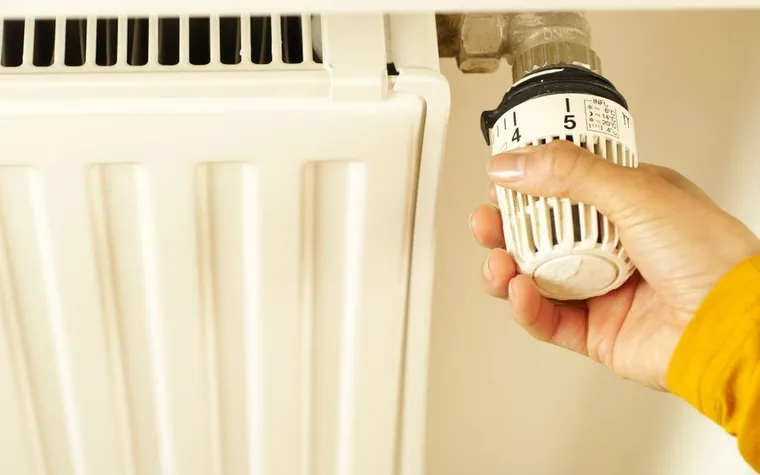
Choose either bill deduction or the National Happiness Card
For the winter voucher you choose bill deduction or the National Happiness Card. For bill deduction, pick one of city gas, electricity or district heating and apply with your most recent bill; the deduction starts automatically the following month. For apartments, the maintenance fee bill serves as the document. Households that use kerosene, LPG or briquettes buy directly at affiliated stores with the card. The card cannot be used at bank counters or utility-payment kiosks, and only the holder may use it. Winter use begins October 1 for virtual cards (bill deduction) and October 3 for physical cards, and both run until May 31, 2027.
Steps in order
(1) Check your abstract for children under 19, children aged 7 or under, and whether you are a single-parent household. (2) Ask your neighborhood office to confirm that your Education Benefit receipt is on record. (3) Check whether you overlap with a briquette coupon or the emergency welfare fuel subsidy. (4) On or after October 3, apply in person or through Bokjiro with your latest bill. (5) If you chose bill deduction, confirm that the deduction appears on the following month's bill.
This article is based on the 2026 eligibility, application and usage pages of the Korea Energy Agency's Energy Voucher website (checked October 2, 2026). Amounts and schedules can change, so confirm with your neighborhood administrative welfare center or the Energy Voucher integrated counseling center (1600-3190) before applying. This is general information and does not determine any individual household's eligibility.
This is an English translation of an article originally written in Korean. 한국어 원문 보기 ›