
A Complaint Sent to Your Child's Teacher's Personal Phone Can Be Refused -- Schools Now Take Complaints Through the Main Number or Eodream, by Appointment
Since March 2026, school complaints go through official channels such as the main number and Eodream. Refusal of personal-contact complaints, appointment-based consultations, example deadlines, and the repeat-complaint rule.
When something urgent comes up, the first thing many parents reach for is the homeroom teacher's personal mobile number or a KakaoTalk message. Since the new school year began in March 2026, however, a complaint sent to a teacher's personal phone or social media account can be refused or closed by the school, and complaints are meant to come in through the school's official channel. This guide draws on the Ministry of Education's School Complaint Handling Manual, issued to schools in March 2026, and explains where parents should reach out to actually get an answer.

What changed - complaints go to the school, not to an individual teacher
When the Ministry of Education and the Korean Council of Superintendents of Education announced their school complaint plan on January 22, 2026, they said complaints should be treated as "the institution's business," not "a teacher's personal business." The intake points are the school's main phone number and the online parent communication system "Eodream" or another channel the school designates; a teacher's mobile phone or social media account cannot serve as one. In the manual's standard model, Eodream is described as an online system built on NEIS, and which channel is used can differ by school and by provincial office of education.
Where to reach out - the school announces its channel at least once a year
Under Article 30-10, paragraph 3 of the Elementary and Secondary Education Act, the principal must regularly tell students and guardians how complaints are handled. The manual suggests announcing and posting this at least once a year through parent general meetings, the school website, or a home newsletter. Look for the channel notice in the newsletter or on the school website, and if you cannot find one, ask the main office first. Online applications that do not use the school's own method go through the Sinmungo (National Petition) system to the office of education.
If you contact a personal number - silence is not unusual
The manual treats staff members' personal contact details as private by default, and lists complaints raised through a personal mobile phone or social media, as well as contact outside working hours, as complaints that may be refused. A teacher may choose to counsel by personal phone, but is not obliged to answer a parent's call to a personal number. A missing reply is not necessarily a snub. It may simply signal that you used the wrong channel, so submit the same content again through the school's main number.
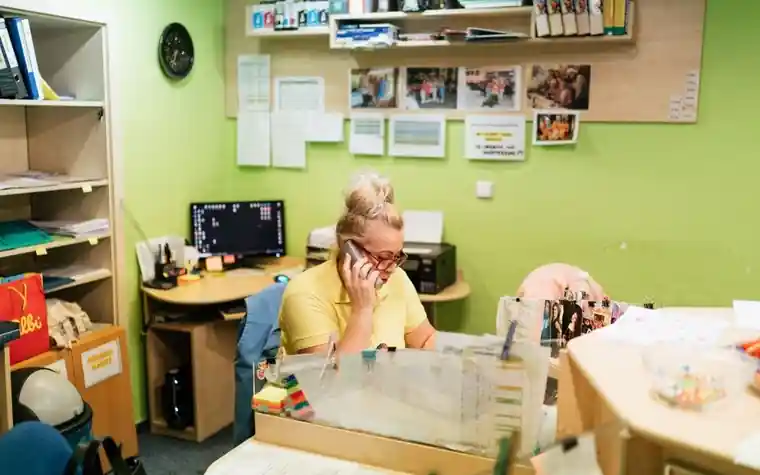
Calls and visits are by appointment - the recommended consultation length is 20 minutes
The manual gives, as an example, handling phone and in-person complaints only at pre-booked times. Calls use the school's office line, visits take place in a designated place such as a complaint consultation room, and the complaint response team may sit in. As a rule, complaints that arrive during class are handled after the lesson ends. A consultation that runs past the recommended 20 minutes without good reason appears among the examples of complaints that can be closed. For urgent matters that cannot be booked, such as a child's safety or health, the principal or the response team can decide to handle them on the spot, so say at the main number that it is urgent.
When will you get an answer - example deadlines of immediately, 7 days and 14 days
Each school sets its own deadlines, but the manual's example is immediately for simple complaints, within 7 days for complex ones, and 14 days (extendable) for complaints overseen by school management. For reference, Article 14 of the Enforcement Decree of the Civil Petitions Act sets 14 days for inquiries asking for an interpretation of a law and 7 days for inquiries about systems and procedures. Asking for an expected reply date when you file makes the wait easier.

Calls may be recorded - a notice plays first
The manual advises schools to set a call-connection message that announces recording and asks for mutual respect, and to use recording-capable phones for consultations. In-person meetings should also begin with a notice that they are recorded. Recording exists to deter abusive language and preserve evidence, and the files must be managed so they are neither leaked nor used for other purposes. For an ordinary conversation, a recording simply keeps an accurate record of what both sides said.
Repeating the same demand three times - the line between closure and interference with teaching
If you keep raising the same content three or more times after receiving a reasonable answer, without good reason, the school may close the complaint. Beyond that, Article 19 of the Teachers' Status Act defines repeatedly filing complaints with no legitimate purpose as an infringement of educational activities, and the manual cites examples such as demanding a homeroom teacher change without grounds or excessively interfering with performance assessments, grading methods, or assignments. If a case is judged an infringement, the teacher rights protection committee can order measures against the guardian such as a written apology and pledge not to repeat it, special training, or psychological treatment. The Ministry also announced a plan to set the fine for guardians who skip special training at 3 million won regardless of the number of violations, but that was a proposal at the time of the announcement, so confirm whether it applies.
Summary - the order for parents to follow
(1) Check the complaint channel and operating hours in the newsletter or on the school website. (2) File through the main number or Eodream and ask when to expect a reply. (3) Write down your questions in advance, as in the conference-week question list, so the talk fits in 20 minutes. (4) For school news, start with NEIS for parents and School Info. (5) If your child is struggling to attend, see early response, attendance and counselling routes, and if it is school violence, the procedure after a report.
This article summarizes Ministry of Education press releases and the School Complaint Handling Manual (March 2026) and is not legal advice. Deadlines and channels differ by school and provincial office of education, so confirm with your child's school and the local office of education.
This is an English translation of an article originally written in Korean. 한국어 원문 보기 ›