
When a child says they do not want to go to school — early response, attendance and counselling routes
School refusal often appears as genuine physical symptoms. This covers how to tell body from mind, the difference between sickness and unauthorised absence, partial attendance and counselling routes, and the options if it continues.
Stomach ache every morning, tears at the front door, several days without going in. What parents choose at this stage shapes the months that follow. Here, in order, is what to check early on, how attendance is recorded, and which counselling routes exist.
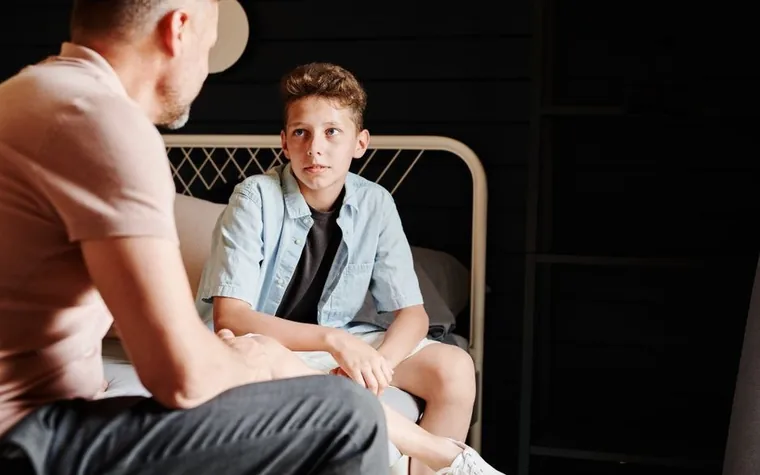
First — separate the body from the mind
A large share of children refusing school are genuinely unwell. Abdominal pain, headache and nausea are common, and it is not pretence. Anxiety presents through the autonomic nervous system as physical symptoms.
The clue that distinguishes them is the time pattern. If it is severe only around the school run and largely absent at weekends and in the holidays, the symptoms are likely tied to the situation. If instead they persist regardless of time, with weight loss or fever, a paediatric appointment comes first.
What matters here is not concluding that the child "isn't really ill". From the child's side it becomes a situation of being genuinely unwell and not believed, and from that point they stop talking.
What to establish before pressing for reasons
Children frequently cannot answer "why don't you want to go?" Either they do not know themselves, or they are hiding it for fear of making things bigger.
There are other things you can establish instead: when it began, whether it coincides with particular days or particular lessons, whether seating or friendships have changed recently, and whether specific situations such as school meals or the toilets are being avoided.
Asking the school brings it out faster. The class teacher sees what happens in the classroom and often holds pieces the parent does not have. Making contact does not itself make the problem bigger.

How absence is recorded — the categories
School attendance is divided into approved attendance, sickness, unauthorised and other. Which category applies changes what the record means.
An absence through illness is logged as sickness absence, but the evidence required differs by school. A medical certificate, a proof of consultation, a prescription, or in some cases a guardian's statement will serve. The standard is set out in the academic management rules issued at the start of the year.
Staying away with no evidence and no reason given makes it an unauthorised absence. Accumulated entries in this category can be read differently in secondary and university admissions, so it is better to follow the procedure even for the same day off. The way attendance appears on the school record carries more weight as the school level rises.
If the child is receiving mental health care, whether to tell the school is a choice. Telling them does, however, widen the scope for agreement on attendance handling and learning support.
Early response at home — three things
First, keep the daily rhythm aligned to school hours. Even on days without school, the waking time stays the same. Long naps and late mornings make returning much harder.
Second, do not let home become more comfortable than school. Keep gaming and screen time at the level of a normal school day. This is not punishment; it is about not building a structure in which avoidance is rewarded.
Third, approach it in stages. If full attendance is out of reach, lower the threshold: the first period only, attending at the school health room, or going at the end of the day simply to see the class teacher. Most of this is possible once agreed with the school.
Counselling routes exist inside and outside school
Inside school there is the Wee Class, and schools without one are connected to the district office's Wee Centre. It is arranged through the class teacher and there is no charge.
Outside school there is the youth counselling and welfare centre on 1388. Telephone, text and messenger counselling are available, and parents can be counselled on their own.
Where anxiety or low mood is pronounced, consider an appointment in child and adolescent psychiatry. Many parents worry about a record being created; medical records are not disclosed to the school or to third parties without consent.
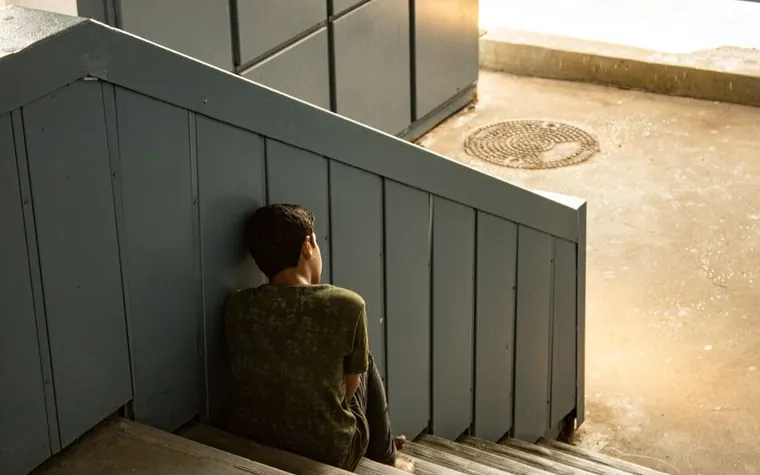
If it continues — the formal options that remain
Where absence extends, the school will explain the procedures for deferral or management outside the enrolment quota. At the compulsory stages, primary and middle school, there is an application to defer or be exempted from the duty to attend; at high school, withdrawal and leave of absence follow different routes.
Choosing to leave school does not close off the path. The out-of-school youth support centre, Kkumdrim, supports equivalency exams and career programmes, and there are courses that help with returning to study.
Before moving to that stage, though, the order is to try partial attendance and counselling thoroughly. A decision made in haste takes longer to undo.
If this coincides with a change of school level, the change of environment may be the cause. Reading what changes between year 6 and year 7 alongside makes it easier to see where the pressure comes from. And if a house move and transfer come into view, note in advance that transfer procedures differ by school level.
This is an English translation of an article originally written in Korean. 한국어 원문 보기 ›