The Developmental Rehabilitation Voucher Can Be Claimed Before a Disability Is Registered — Referrals Under Nine, and a 0-80,000 Won Share
Under nine? A specialist referral is enough. Your share: 0-80,000 won a month.
Once a child starts speech therapy or play therapy, the cost is the first obstacle: tens of thousands of won per session, week after week. There is a government voucher that covers much of it, and many parents delay applying because they believe it is only for children with a registered disability. The rule says otherwise. Even without registration, a child under the age of nine can apply on a specialist's referral. This is the developmental rehabilitation service.
What the programme pays for
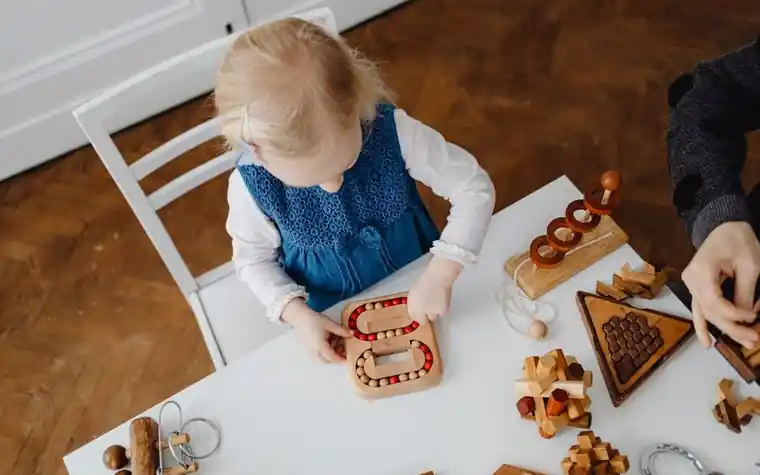
The developmental rehabilitation service is a Ministry of Health and Welfare programme that funds rehabilitation for children with disabilities through a voucher: speech and hearing, art and music therapy, play and psychological therapy, behavioural development, rehabilitation psychology, psychomotor work, and sensory and motor development. No cash is paid out; a monthly entitlement is loaded onto a card for use at registered providers.
The point is early intervention. Support matters most while development is still delayed, and that period usually precedes a confirmed diagnosis — so the scheme is designed to bridge exactly that gap.
Under 18, with household income at or below 180% of the median
Eligibility covers children under 18 registered with a visual, hearing, speech, intellectual, autistic or brain-lesion disability. The income test is 180% of the standard median income or less, which is wider than most families assume and takes in a good number of dual-income households. Rather than ruling yourself out on income alone, have the figure checked at the community service centre using your assessed income.
You can apply before the disability is registered
This is the clause most parents miss. A child under nine who is not registered but is expected to have a visual, hearing, speech, intellectual, autistic or brain-lesion disability may apply using a developmental rehabilitation service referral written by a specialist, together with domain-specific assessment results and test records, in place of a registration card.
In other words, support can begin before a diagnosis is fixed. If an infant health check flagged the need for detailed assessment, or a language evaluation confirmed a delay, the first step is to take those results to the clinic and ask about a referral. What to do when a screening comes back for review is set out in when a late-talking child should be assessed.
The monthly total is 260,000 won; income changes only your share
The structure is clearest as a table.
| Income bracket | Voucher support | Your share |
|---|---|---|
| Basic livelihood recipients | 260,000 won/month | Exempt |
| Near-poverty bracket | 240,000 won/month | 20,000 won |
| Up to 65% of median income | 220,000 won/month | 40,000 won |
| 65-120% of median income | 200,000 won/month | 60,000 won |
| 120-180% of median income | 180,000 won/month | 80,000 won |
Add the support and the co-payment in any bracket and the result is 260,000 won every time. The spending power is identical; only the portion you contribute moves with income. Anything a provider charges above that total is on you, so ask about the per-session rate and the number of sessions per month before choosing one.
Which services are covered
The eligible domains are fixed: speech and hearing; art, music, play and psychological therapy, behavioural development, rehabilitation psychology and psychomotor work; and sensory and motor development. In practice speech therapy is used most, followed by play and art-based work.
One caution belongs here. This voucher does not replace physiotherapy or occupational therapy, which are medical treatments. Rehabilitation delivered in hospital sits under national health insurance; the developmental rehabilitation service sits with community providers. Which should come first depends on the child, and that decision belongs with the treating doctor.
Applications start at the community service centre
The process is straightforward. File the application at the community service centre for your address; the district office then assesses income and household composition, selects recipients and notifies the outcome. Once selected, you receive the voucher card and use it at registered providers.
Bring the application form, the child's disability registration card (or, if unregistered, the referral and assessment results), and income and asset documents. Several weeks pass between applying and using the voucher, so if therapy has already started, plan around the fact that those sessions are paid privately in the meantime.
It is easily confused with the language development programme
The similarly named language development support programme targets the opposite group. Where the developmental rehabilitation service is for children who have, or are expected to have, a disability, language development support is for children without disabilities whose parents are registered as disabled. Both are handled at the same counter, so name the programme precisely when you apply.
Once a child reaches school age, support inside school follows a different route. That procedure is covered in special education eligibility, and the check-up schedule itself in infant health check-ups.

In short
Work through it in this order. First, is the child under 18 (and, if unregistered, under nine)? Second, is household income at or below 180% of the median? Third, if there is no registration card, can you obtain a specialist referral and assessment results? Fourth, apply at the community service centre. Fifth, choose a provider once the decision arrives. Depending on the bracket, your share runs from zero to 80,000 won.
The costliest mistake is assuming it is unavailable without a disability registration and losing months without applying. This article explains the programme; it does not substitute for a diagnosis or a treatment recommendation for your child. Confirm eligibility and required documents with your local community service centre and the treating clinic.
This is an English translation of an article originally written in Korean. 한국어 원문 보기 ›