
Government Child Care Support Is Not Decided by Income Alone -- The Financial Information Consent Form, the 30-Day Notice, and Idolbomsa vs. Parenting Helpers
Documents for the child care support application, the scope of financial information consent, the 30-day notice deadline, and designated vs. registered agencies, based on the law.
When you start looking into the child care service, your eye goes first to "what income level qualifies for government support," but the real snags come before and after that. The application includes a consent form for providing financial information, and what you need to check changes depending on whether the person coming to your home is an "Idolbomsa" (certified child care worker) or a "parenting helper." This article follows the Child Care Support Act (the version in force from April 23, 2026) and its enforcement decree and rules, and sets out what you submit, how soon you get an answer, and who actually comes.

Children aged 12 and under are covered, and the service is delivered at the child's home
Article 2 of the Act defines a "child" as a child aged 12 or under and the child care service as protection and upbringing provided individually at the child's residence or similar place. The official guidance site says the hourly service is available for children from three months old to 12, that each booking is for at least two hours, and that extra time is added in 30-minute units. Unlike institutional care at a daycare center or kindergarten, someone comes to your home. If you want to compare with institutional care, see where to apply for kindergarten and daycare first.
The terminology has changed: the former "child care helper" is now an "Idolbomsa"
The current text of the Act no longer uses the older term. A person who has obtained the qualification and provides the service is an Idolbomsa, and a person who provides the service without that qualification is a parenting helper (Article 2). The enforcement decree and rules were also amended in April 2026 to replace the old term with "Idolbomsa" throughout. If an older article or review uses the old term, you can read it as referring to the same qualification as today's Idolbomsa.
Designated agencies and registered agencies are different
Article 11 provides for child care service agencies designated by the city, county or district, and Article 11-2 provides for other agencies that register and operate on their own. Under Article 8-2 of the enforcement rules, a registered agency must have terms of use and a way to handle complaints, must disclose the number of Idolbomsa and parenting helpers and its service fees, and must carry liability insurance. The insured amounts per victim are at least 150 million won for death and at least 30 million won for injury. This gives you grounds to ask, before signing, whether an agency is designated or registered and whether it can show proof of insurance.
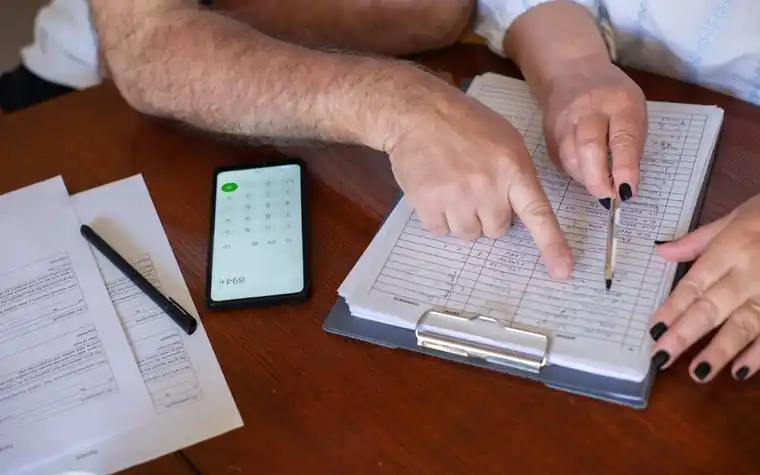
Government support does not look at income alone: the financial information consent form
Article 20 says the national and local governments may pay all or part of the cost for households below a certain income, and may vary the support by income level, area of residence and parents' employment. Under Article 14 of the enforcement rules the income standard is announced each year by the minister, and a government policy news item said that from 2026 it was widened from 200% or less of the median income to 250% or less. However, under Article 22 an applicant must also submit a consent form for providing financial, credit and insurance information for the guardian and household members. The scope set by Article 3 of the enforcement decree covers the average balance of demand deposits over the last three months, balances of savings deposits, market value of stocks and similar holdings, loan status and arrears, unpaid credit card balances, and insurance surrender values. Knowing this in advance spares you a wasted trip after preparing only income documents.
Documents to submit and the deadline for notice of the result
The documents under Article 15 of the enforcement rules are the support application, an income and asset declaration (where officials cannot verify it), proof such as a health insurance premium payment certificate, the financial information consent form, proof of identity, and a family relation certificate. The city, county or district that receives them must tell you within 30 days of receipt whether you are eligible and what support you get, and where income and asset checks take time for a special reason it may extend this to 60 days. If you need care urgently before notice arrives, ask at the counter in advance whether you would use the service without support in the meantime and which fees would apply. To compare with part-time daycare, hourly fees for part-time childcare may also help.

Some households have priority access
Article 13-2 requires the national and local governments and designated agencies to let the following households use the service first: children of basic livelihood recipients and of the near-poor, children of single-parent families and teenage parents, children whose parent has a disability (or who have a sibling with a disability), children of multicultural families and of persons with a disabled-veteran grade, and children of dual-income families. Exceptions are allowed for justified reasons such as a shortage of budget or of Idolbomsa. The structure differs from the points system for daycare waiting lists, so do not confuse it with daycare waiting list points.
What to check about who is coming
To become an Idolbomsa, a person must complete a training course or hold a qualification set by the enforcement decree, and pass an aptitude and personality test. The training covers child rights and abuse prevention, safety management and sexual harassment prevention. A person whose fine for a child abuse-related offense became final less than 10 years ago is disqualified (Article 6). A parenting helper who falls under a disqualification also cannot work at a registered agency, and under Article 19-2 may request a certificate of identity verification by submitting a health certificate and a criminal record check application. Lending a qualification certificate is prohibited, so confirming a visitor's identity and qualification on the first day is not rude.
Where to check
(1) Register as a member on the child care service website, confirm your eligibility for government support, and then set up a payment method with the National Happiness Card. For inquiries call 1577-8136 (weekdays 09:00-18:00). (2) Submit the support application to the relevant department of your city, county or district. (3) The income standard, service fees and the annual support hours for vulnerable households change from year to year, so check the notice in force when you apply. This article is general information summarizing laws and government announcements; whether a given household is supported and how much depends on the decision of the agency in charge, so please confirm through the official channel.
This is an English translation of an article originally written in Korean. 한국어 원문 보기 ›