Language Development Support Isn't About the Child's Disability -- It's About the Parent's
If a parent is a registered person with a disability, their non-disabled child can get a language rehabilitation voucher too -- eligibility, income limits, and monthly amounts.
When a child is slow to talk, parents usually start by looking into testing the child. But there is a separate program that looks at the parent instead of the child. If one parent is a registered person with a disability, the child -- even without any disability -- can get language rehabilitation costs covered through a voucher. This is the Language Development Support Program. It is often confused with similarly named programs, but it differs from them in both who qualifies and how the payout is structured.
What This Program Covers
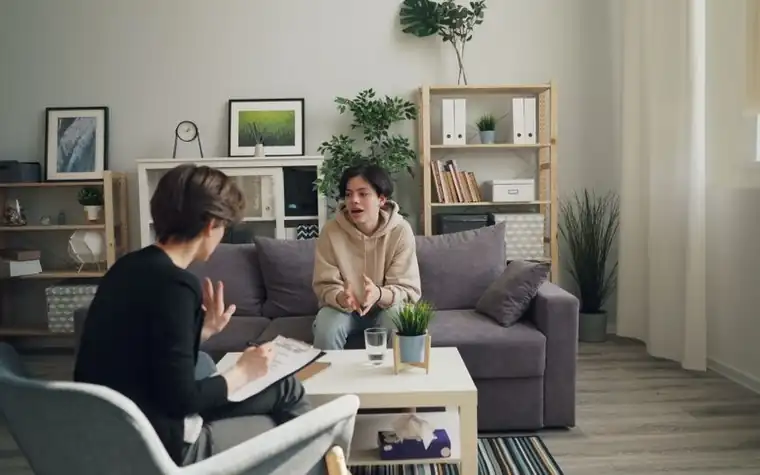
The Language Development Support Program is a Ministry of Health and Welfare voucher program that covers the cost of language development diagnosis and language rehabilitation services for non-disabled children of a registered person with a disability. It was designed around a specific concern: when a parent has a hearing or speech disability, the everyday spoken exchange at home can be reduced, and that can affect the child's own language development. The starting point for eligibility is not the child's own diagnosis but whether a parent is registered as disabled, and that is the core of this program.
Eligibility Turns on the Parent's Disability Registration, Not the Child's
The program covers non-disabled children under age 12, where one parent (or, in a grandparent-headed household, one grandparent) is registered with a visual, hearing, speech, intellectual, autism-spectrum, or brain-lesion disability. Simply suspecting a disability without formal registration does not qualify. The first document to check is whether the parent holds a disability registration certificate.
The Income Threshold Is 120% of the Standard Median Income
Household income must be at or below 120% of the standard median income. For 2026, the 100% standard for a four-person household is 6,494,738 won a month, so 120% comes to roughly 7.79 million won. This figure changes with household size, so it is best to confirm the exact threshold for your household at your local dong office.
The Voucher Amount Ranges From 180,000 to 240,000 Won a Month by Income Bracket
The voucher is paid monthly, and both the government-funded portion and the co-payment change by income bracket.
| Income Bracket | Voucher Amount | Co-Payment |
|---|---|---|
| Basic livelihood recipient | 240,000 won/mo | Waived |
| Near-poverty bracket | 220,000 won/mo | 20,000 won |
| 65% of median income or below | 200,000 won/mo | 40,000 won |
| 65-120% of median income | 180,000 won/mo | 60,000 won |
Unlike the Developmental Rehabilitation Service, the voucher amount plus the co-payment does not add up to the same total across brackets. The lower the income, the larger the voucher itself. If a provider's fee exceeds the voucher total, the excess is entirely out of pocket, so it pays to ask a provider about its per-session rate and monthly session count before choosing one.
What Services Are Covered -- Language Rehabilitation, Auditory Rehabilitation, Reading Guidance, Sign Language Instruction
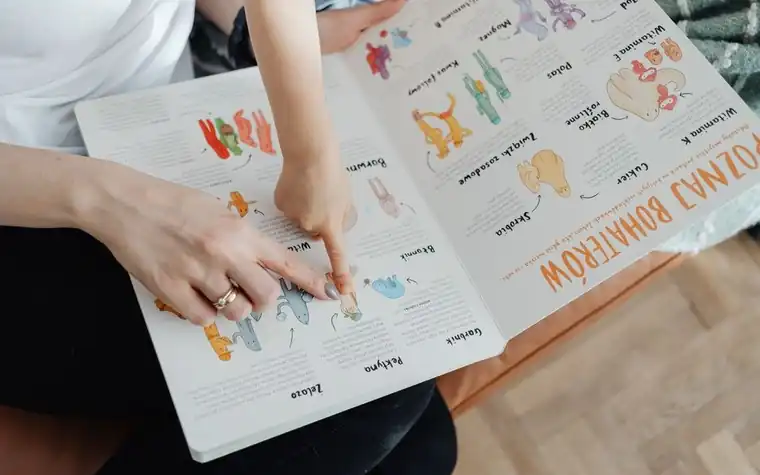
The covered scope is set to language development diagnosis, language and auditory rehabilitation, reading guidance, and sign language instruction. Each session runs 50 minutes in principle, which includes a parent consultation. Academic tutoring or workbook-style instruction is not covered, so it's worth confirming that a provider operates within this scope before booking a session.
Services can only be used at a registered provider designated by the city, county, or district -- the voucher is not valid at just any speech therapy clinic. Before applying, it helps to call ahead and check whether a nearby provider has an opening at the day and time you want, so you can start right after being approved.
It Is a Different Program From Language Development Support for Multicultural Families
There is another program with an almost identical name that is easy to confuse with this one. Language Development Support for Multicultural Families is based on the Multicultural Families Support Act and is applied for through Danuri; the qualifying condition there is being a multicultural family, not a parent's disability registration. It is covered separately in Language Development Support for Multicultural Families. It is also a different program from the Developmental Rehabilitation Voucher, which covers children who themselves have or are expected to have a disability -- so when you call a support desk, it helps to name the exact program.
Applications Start at Your Local Dong Office or on Bokjiro
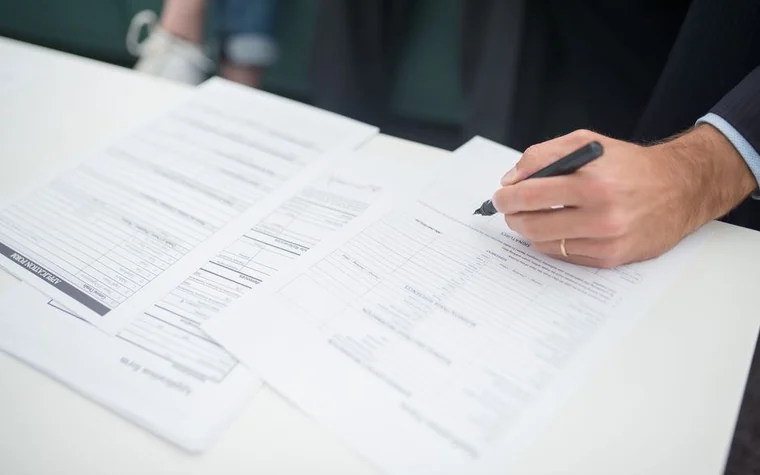
You can apply in person at the community service center for your registered address, or online through the Bokjiro website (bokjiro.go.kr). You will need an application form along with the parent's disability registration certificate, documents confirming the family relationship, and income and asset verification documents. The application can be filed by the child, a parent, another household member, or an authorized representative, and in some cases a welfare caseworker files it on the family's behalf. After the application, an income and asset review is conducted; once approved, a voucher is issued and services can begin at a registered provider.
In Short
Here is the order to check things in: (1) is one parent registered with a visual, hearing, speech, intellectual, autism-spectrum, or brain-lesion disability; (2) is the child under age 12; (3) is household income at or below 120% of the standard median income; (4) apply at your dong office or through Bokjiro; (5) after approval, use language rehabilitation, auditory rehabilitation, reading guidance, or sign language instruction as needed at a registered provider. The most important thing not to miss is that the child does not need a diagnosis of their own to qualify. If your child later needs support at school, that leads into the Special Education Eligibility process, and if you're just starting to worry about a speech delay, check the screening sequence first in When a Child Is Slow to Speak. This article explains the program and does not diagnose any individual child or determine disability registration status. Please confirm eligibility and required documents with your local community service center or the Ministry of Health and Welfare (129).
This is an English translation of an article originally written in Korean. 한국어 원문 보기 ›