Newborn Hearing Screening Came Back 'Refer' -- Diagnostic Test Costs Are Covered Up to 70,000 Won, Regardless of Income
After a refer result, diagnostic test cost support up to 70,000 won since 2024 (no income limit), plus hearing aid support
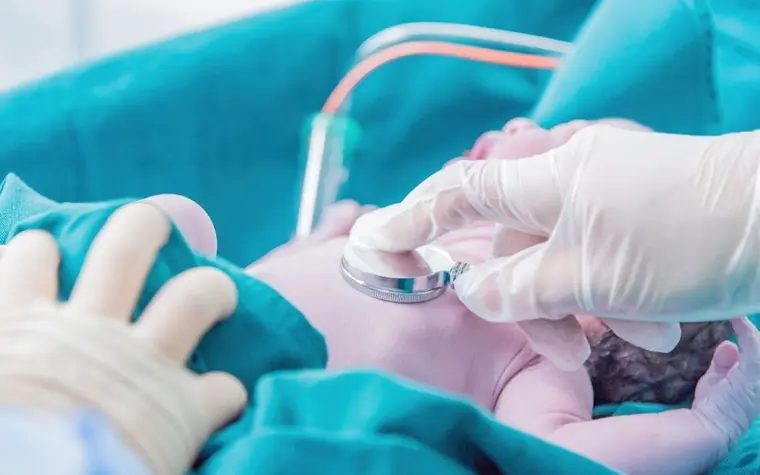
If you watched a nurse hold a small device against your baby's ear for a few minutes before discharge, that was the newborn hearing screening test. Most parents just hear "it's normal" and move on, but some get a result that says "refer" instead of "pass," and it can be alarming. A refer result is not a diagnosis of hearing loss -- it's simply a signal to move to the next step. Many parents miss the deadline for the follow-up procedure and the cost support because no one explains it clearly. Here is exactly what to do after a refer result, and how much support is available.
When and how the newborn hearing screening is done
The newborn hearing screening is usually performed at the hospital before discharge. It uses one of two methods: automated otoacoustic emissions (AOAE) or automated auditory brainstem response (AABR). Both let a machine automatically judge the baby's response to a sound stimulus while the baby sleeps. The result is not a detailed hearing measurement -- it's simply "pass" or "refer." The test is covered by national health insurance, and the out-of-pocket cost of the screening itself is subsidized regardless of household income.
A 'refer' result does not mean hearing loss is confirmed
A refer result only means the machine could not register a response at that moment -- it is not a diagnosis that your baby has hearing loss. A refer can happen simply because the baby moved during the test, or because amniotic fluid or vernix is still in the ear canal. The real risk is assuming "it'll probably clear up on its own" and putting off the next test. Whether one ear or both ears come back as refer, you need a proper diagnostic test at an ENT (otolaryngology) clinic to find out the baby's actual hearing status. The screening test and the diagnostic test are two separate steps, done at different facilities with different methods.
The diagnostic test must include ABR or ASSR
The diagnostic test is done at an ENT clinic, and it must include either an auditory brainstem response threshold test (ABR) or an auditory steady-state response test (ASSR) as one of the test items. If neither ABR nor ASSR is included and only some other hearing test is done, you may be excluded from the government support program described below -- so it's worth asking in advance, "Does this diagnostic test include ABR or ASSR?"
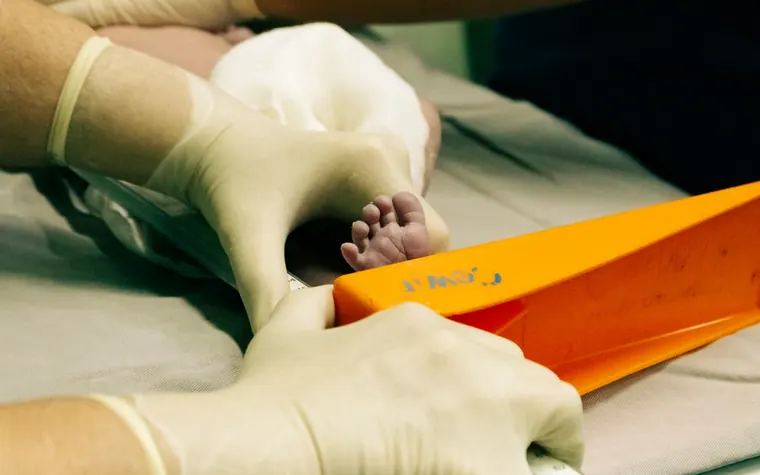
Diagnostic test cost support -- up to about 70,000 won, regardless of income since 2024
The out-of-pocket cost of the diagnostic test you get after a refer result can be reimbursed up to roughly 70,000 won through a government support program. It used to require meeting a household income threshold, but since 2024 the income requirement has been removed, so any household can apply regardless of income. Even if the diagnostic test comes back normal rather than confirming hearing loss, the cost of that diagnostic test itself still qualifies for support.
If the diagnostic test confirms hearing loss -- hearing aid support up to about 1.35 million won
If the diagnostic test confirms hearing loss, you can also get support toward the cost of a hearing aid. Based on an average hearing threshold of 40-59 dB in the better ear, support covers two hearing aids for bilateral hearing loss, or one for unilateral hearing loss, with a support cap of about 1.35 million won per device. This applies to children under age 12 (under 144 months). The purchase must fall within six months before or after the date you apply at the public health center. If you buy a hearing aid first and apply much later, you may fall outside that window and miss the support -- so it's safer to confirm eligibility and the support cap with the health center before you buy.
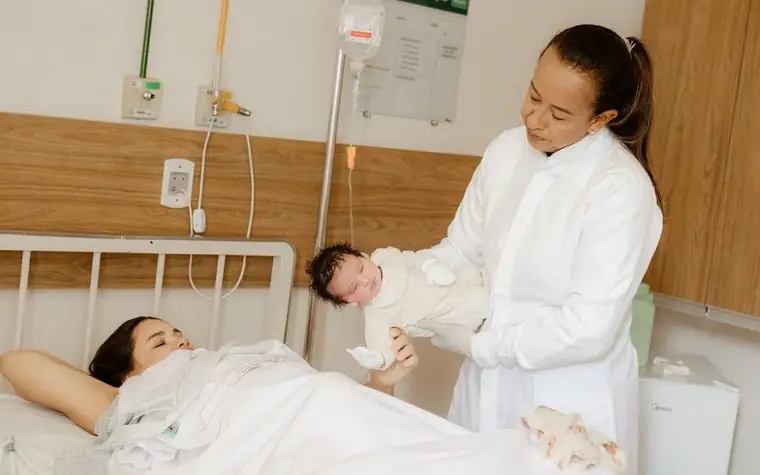
Application deadline and how to apply
You must apply for the test-cost support within one year of the baby's date of birth. You can apply in person at your local public health center, or online through the e-health public health portal or the i-Majung app. Documents needed include an application form (with personal-information consent), the test-fee receipt and itemized statement, the test result report, a copy of the guardian's bankbook, and ID. Some of these documents need to be issued by the hospital, so it helps to request them on the day of the visit so the application goes smoothly afterward.
What to keep checking after discharge
Children found to have hearing issues often need ongoing monitoring of language and cognitive development as well. Keep up with the eighth round of the national infant health checkup schedule to track development regularly, and if the language section flags a recommendation, it helps to know the next steps after a language-development recheck recommendation. If a hearing issue leads to ongoing language delay, you can apply for a developmental rehabilitation service voucher even before formal disability registration. And if your baby was born premature and is already receiving other medical cost support, it's worth checking whether you also qualify for medical expense support for premature and congenitally ill infants.
Step-by-step summary
- Check whether the newborn hearing screening result before discharge was "refer."
- If it was refer, book a diagnostic test at an ENT clinic that includes ABR or ASSR.
- Remember the diagnostic test cost is supported up to about 70,000 won, regardless of income.
- If hearing loss is confirmed, contact the health center before buying a hearing aid to confirm eligibility and the cap (about 1.35 million won per device).
- Apply within one year of birth at your local public health center or through the e-health portal or i-Majung app.
Support amounts and eligibility criteria can change with each year's local and national program notice, so please confirm the latest details with your local public health center or on Bokjiro (bokjiro.go.kr) before applying.
This is an English translation of an article originally written in Korean. 한국어 원문 보기 ›