
Medical Costs for Premature and Congenitally Ill Infants Are Now Covered Up to 27 Million Won, No Income Limit -- Apply Within 6 Months of Discharge
Korea's medical expense support program for premature and congenitally ill infants dropped its income requirement in 2024. Here's who qualifies, the weight-based support caps, how the 1-million-won reimbursement threshold works, and the six-month filing deadline from discharge.
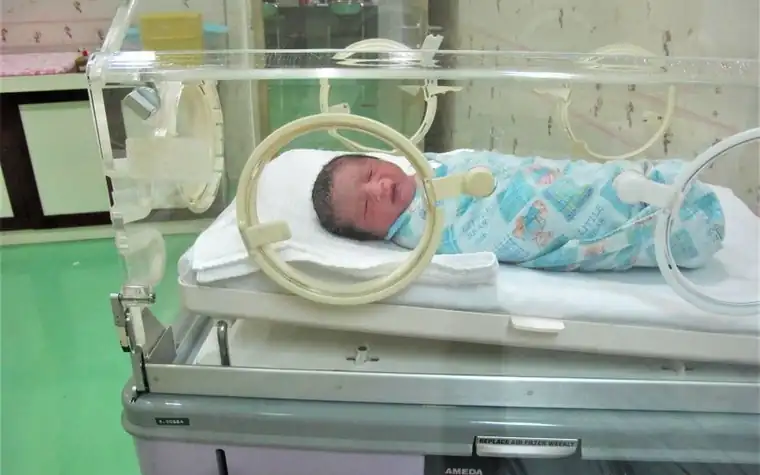
When a baby arrives earlier than expected and goes into the NICU, or is born with a congenital condition, medical costs are usually the first worry. The medical expense support program for premature and congenitally ill infants is a government program that covers part of the medical bill for these families, and since 2024 it's been open to everyone regardless of household income. Here's who qualifies, what the caps are, and the filing deadline.
What "no income limit" actually means
This program used to have a household income threshold -- if a family's income was above a certain level, they couldn't get support even if their baby was born premature or with a congenital condition. Since 2024, that income requirement has been eliminated entirely, meaning regardless of parental income, any family can apply if either of two conditions below is met. If your family assumed you weren't eligible because of income and never applied, it's worth checking the current rules again.
Who qualifies -- premature infants and congenitally ill infants have different criteria
A premature infant qualifies if they needed urgent surgery or treatment and were admitted to the NICU within 24 hours of birth. A congenitally ill infant has a different bar: the baby must have been diagnosed with a congenital condition (a Q-code diagnosis) within 2 years of birth, and have been hospitalized and undergone surgery within 2 years of birth to treat that condition. It's easy to miss that a diagnosis alone isn't enough -- actual hospitalization and surgery are required. The method of delivery (vaginal or C-section) has no bearing on eligibility, and each baby in a set of twins or multiples is applied for separately. It's possible for one baby to qualify and another not to, so if you're raising multiples, check each baby's conditions individually.
Support caps -- they vary by birth weight, and stack if both apply
The support amount is tiered based on the baby's condition. Premature infants are covered up to 20 million won depending on birth weight, and congenitally ill infants are covered up to 7 million won. If a baby was born premature and also diagnosed with a congenital condition, meeting both sets of criteria, the premature-infant cap (4 million to 20 million won depending on weight bracket) and the congenital-condition cap of 7 million won stack, for a combined maximum of 27 million won. The actual amount paid out is settled within that cap based on the patient's actual out-of-pocket and non-covered medical costs, so the full medical bill isn't automatically paid in full -- that distinction is worth keeping in mind. On top of this, some local governments offer additional support under their own ordinances, separate from the national program, so when you contact your local public health center, it's worth asking whether there's a local supplement on top of the national support -- that can mean not leaving money on the table.
Filing deadline -- six months from discharge
The detail families miss most often is the filing deadline. You must apply within six months of the (final) discharge date. It's easy to blow past this deadline in the chaos of caring for a newborn for the first few months, but once the deadline passes, it becomes difficult to get retroactive support even for medical bills you've already paid. If there were multiple hospital stays or a transfer to a different hospital, note that the six-month clock is calculated from the most recent discharge date.
How to apply -- in person at a public health center, or online
You can apply in person at the public health center covering your registered address, or online through e-Health (e-health.go.kr) or the Aimajoong app. Online filing has cut down on the burden of hauling a newly discharged newborn to a health center, but you'll still want to get the diagnosis and itemized medical bill documents from the hospital in advance so the application goes smoothly. Exactly which documents are required can vary slightly by health center, so it's worth double-checking with your local center or the e-Health notice before you apply, to avoid a wasted trip.
How the actual reimbursement is calculated -- 1 million won is the threshold
A cap of up to 20 million won doesn't mean you get that entire amount back if your bill happens to reach it. The settlement structure has a 1-million-won threshold built in. If the combined out-of-pocket and non-covered medical costs come to under 1 million won, that's reimbursed in full; the portion above 1 million won is reimbursed at 90%. So if out-of-pocket and non-covered costs total 3 million won, the first 1 million is covered in full, and 90% of the remaining 2 million (1.8 million won) is added on top, for a total of 2.8 million won reimbursed (naturally, never exceeding the overall cap for that weight bracket). Knowing this calculation ahead of time makes it easier to estimate roughly how much you'll get back when the medical bill arrives.
Support that continues after discharge
Babies treated for prematurity or a congenital condition often need continued developmental monitoring after discharge. Keeping up with the eight rounds of the national infant health checkup schedule lets you catch developmental delays early, and if a delay is found, it helps to know that the developmental rehabilitation service voucher can be applied for even before formal disability registration. Premature babies can also show language development lagging behind peers, so it's worth knowing ahead of time what happens next if a developmental screening flags a language-area referral for further evaluation. Later, if special education support becomes necessary, understanding how the eligibility process for special education support works ahead of time is worth doing as well.
Checklist
- Check whether your baby meets the criteria for a premature infant (NICU admission within 24 hours) or a congenitally ill infant (Q-code diagnosis plus hospitalization and surgery within 2 years).
- Remember there is no income requirement -- don't assume you're ineligible based on outdated information.
- Get your diagnosis and itemized medical bill documents from the hospital in advance.
- Apply within six months of discharge, either at your local public health center or via e-Health/Aimajoong.
- After discharge, keep tracking development through infant health checkups.
This is an English translation of an article originally written in Korean. 한국어 원문 보기 ›