
Even a Brief Stop to Drop Your Child Off at School Counts as Stopping: Child Protection Zones Ban Stopping and Parking, a Passenger Car Pays KRW 120,000 Between 8 a.m. and 8 p.m., and Only Places With a Child Drop-Off Sign Are Exempt
In a Child Protection Zone even 30 seconds of dropping a child off counts as stopping. The legal definition, the drop-off sign exception, the KRW 120,000 fine from 8 a.m. to 8 p.m. and a parent's duties.
When the morning is tight, it is tempting to stop in front of the school gate and just let the child out. But in a Child Protection Zone even a brief stop is prohibited. The Road Traffic Act defines a stop as halting a vehicle for no more than five minutes without parking, so the 30 seconds it takes a child to get out also counts. This article is based on the Road Traffic Act and its Enforcement Decree and Enforcement Rule, checked on the National Law Information Center on 18 October 2026, and covers only what parents need to know on the school run.
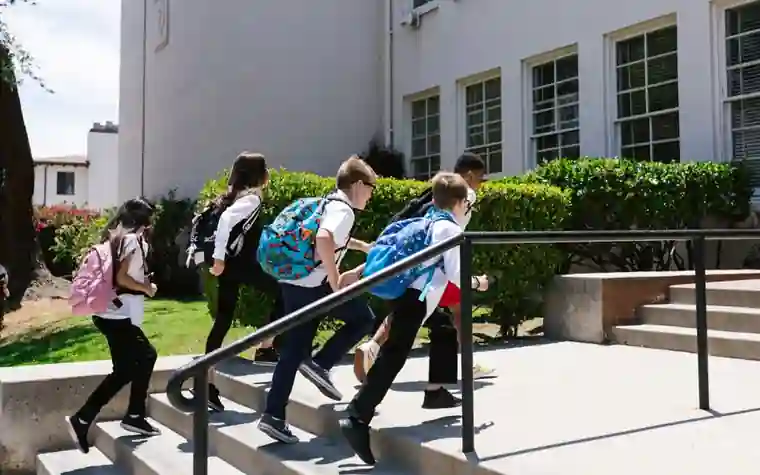
Even the 30 seconds it takes to drop a child off is a stop
Article 2 of the Road Traffic Act defines a stop as "a driver halting a vehicle for no more than five minutes, in a state other than parking".
Article 32, item 8 then prohibits all vehicles from stopping or parking in a Child Protection Zone designated by a mayor or other local authority head.
So putting on the hazard lights for one minute, or staying in the driver's seat, does not turn it into something the law allows.
Child Protection Zones are not only around primary schools
Article 12, paragraph 1 lists the places a mayor or similar authority can designate as a Child Protection Zone.
- Kindergartens, primary schools and special schools
- Daycare centres and private academies that a Ministry of the Interior and Safety ordinance specifies
- Foreign schools, alternative schools and international schools that have a kindergarten or primary programme
- Other places children visit often, as set by local ordinance
In these zones the speed of vehicles is limited to 30 kilometres per hour or less.
The extent of a zone is shown by road markings and safety signs, and you can ask the local government where the school is for the exact boundary.
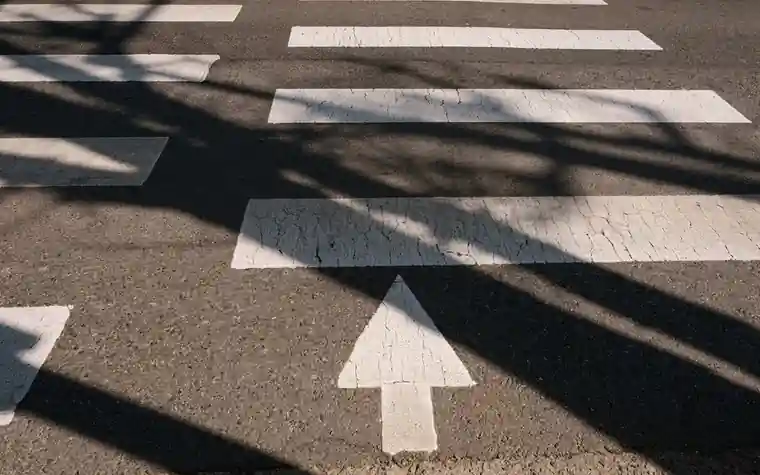
The only exception is a place with a "child drop-off sign"
Annex 6 of the Enforcement Rule contains safety sign 320-4, the "child drop-off sign".
In a Child Protection Zone it directs that child shuttle buses and cars may stop and park to let children board or alight for the time shown on the sign.
There is a separate sign (320-3) for child shuttle buses only, so the two signs need to be read apart.
Where there is no such sign, the area in front of the school gate is no exception.
The permitted time is written on each sign, so do not remember it as one fixed time set by law.
A violation costs KRW 120,000 for a passenger car
Annexes 7 and 10 of the Enforcement Decree set separate amounts for violations between 8 a.m. and 8 p.m. in a Child Protection Zone.
- Stopping or parking violation, administrative fine (to the vehicle's owner): KRW 120,000 for a passenger car, or KRW 130,000 if it is in the same place for two hours or more
- Stopping or parking violation, penalty fine (on-the-spot enforcement): KRW 120,000 for a passenger car
- Other hours: the general standard in Annex 6 applies, KRW 40,000 for a passenger car, or KRW 50,000 for two hours or more
Speeding is also penalised more heavily in the same hours.
Exceeding the limit by up to 20 km/h is an administrative fine of KRW 70,000 for a passenger car, and by more than 20 and up to 40 km/h it is KRW 100,000.
Vans and larger vehicles pay KRW 10,000 more in each case.
When the child gets out, check the car door first
Even at a permitted drop-off spot, the moment the door opens is the risky one.
Article 49, paragraph 1, item 7 of the Road Traffic Act says a driver must not open a vehicle door or get out without making sure it is safe, and must take the steps needed so that passengers do not create a traffic hazard.
The child should leave by the pavement-side door rather than the road side, and it helps to set a rule that the parent first checks for bicycles and motorbikes coming from behind before the door is opened.
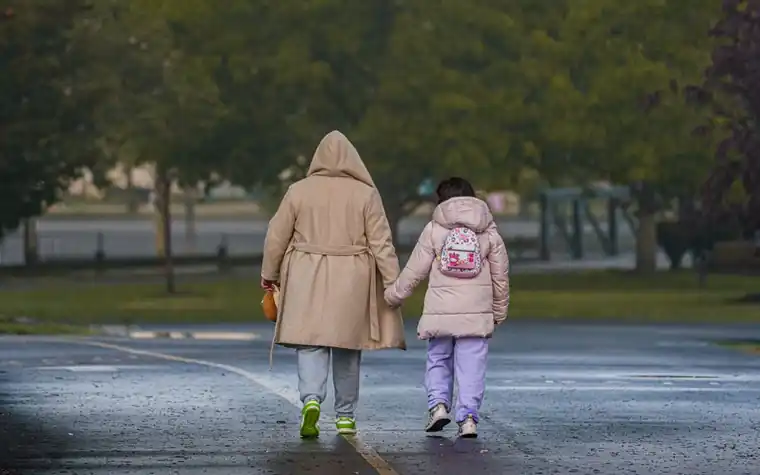
What the law asks of a parent walking a child to school
Article 11 asks the guardian of a child (under 13) to do the following.
- Do not let the child play on a busy road
- Do not let a child under 6 walk alone on a busy road
- Make the child wear protective gear, such as a helmet, when riding a bicycle on a road
- Do not let the child operate a personal mobility device on a road
Letting a child ride something like an electric kickboard counts as a breach of this article by the guardian.
If your child cycles to school, wearing a helmet is what the law asks the guardian to ensure.
If there is an accident, the penalty changes sharply
Article 5-13 of the Act on the Aggravated Punishment of Specific Crimes increases the penalty for a driver who breaches the duties in Article 12 of the Road Traffic Act in a Child Protection Zone and injures or kills a child under 13.
If the child dies, the penalty is life imprisonment or imprisonment of at least three years. If the child is injured, it is imprisonment of one to fifteen years or a fine of KRW 5 million to 30 million.
An accident caused by hurrying inside a zone can become a question of criminal liability rather than a fine.
For compensation when a child is hurt inside the school, see the school safety mutual aid claim procedure.
Agree on this for tomorrow morning
1) Walk the route to school and find where the child drop-off signs are. 2) If there is no sign, stop somewhere safe away from the gate and have the child walk only on the pavement. 3) Read the permitted time on the drop-off sign and finish within it. 4) Before the child gets out, check for vehicles and bicycles behind on the door side. 5) If you are unsure about the extent of a zone, ask the traffic department of the local government or the police station in charge.
The flow of the first week of school is set out in the primary school entry procedure and the pre-enrolment notice.
For the cameras installed at gates and corridors, see where school cameras are now mandatory.
The sources are Articles 2, 11, 12, 32 and 49 of the Road Traffic Act, Annexes 6, 7 and 10 of its Enforcement Decree, Annex 6 of the Enforcement Rule and Article 5-13 of the Act on the Aggravated Punishment of Specific Crimes, all checked on 18 October 2026. Laws can be amended and this article does not replace legal advice, so check individual cases with the police or a lawyer.
This is an English translation of an article originally written in Korean. 한국어 원문 보기 ›